
Where Molecular Intelligence Becomes Biological Insight
Biology is increasingly understood through patterns that are too complex to be captured by a single experiment, a single molecular layer, or a single analytical approach.
Intelligent Biomolecular Research explores the intersection of molecular biology, computational analysis, biomolecular systems, and emerging biotechnology to investigate how biological information is organized, interpreted, and transformed across complex systems.
Our approach brings together biomolecular research, quantitative thinking, computational intelligence, and biological discovery to create new perspectives on molecular phenomena.
Our Scientific Perspective
From Molecules to Systems
We examine biological phenomena across multiple levels of organization, connecting molecular components with broader biological behavior.
From Data to Meaning
Modern biology generates enormous volumes of molecular data. Our interest lies not simply in producing data, but in extracting meaningful biological relationships from it.
From Patterns to Hypotheses
Complex datasets can reveal molecular patterns that suggest new biological questions, mechanisms, and research directions.
From Established Methods to Emerging Concepts
We follow developments across molecular biology, biotechnology, computational biology, and intelligent analytical approaches to explore new ways of studying biological systems.

Biomolecular Intelligence
The term biomolecular intelligence reflects a central idea behind our research philosophy:
Biological systems contain information, relationships, and patterns that can be investigated through increasingly intelligent analytical approaches.
This perspective connects traditional molecular research with computational methods capable of handling multidimensional biological information.
Rather than separating experimental biology from computational interpretation, we consider them complementary components of modern biomolecular investigation.

Research Domains
Molecular Biology
Explore the molecular mechanisms underlying biological organization, cellular communication, gene regulation, and biomolecular interactions.
Research perspectives may include:
- Molecular mechanisms
- Gene expression
- Regulatory biology
- DNA and RNA biology
- Protein function
- Molecular interactions
- Cellular signaling .Learn more
The Molecular Layers of Life
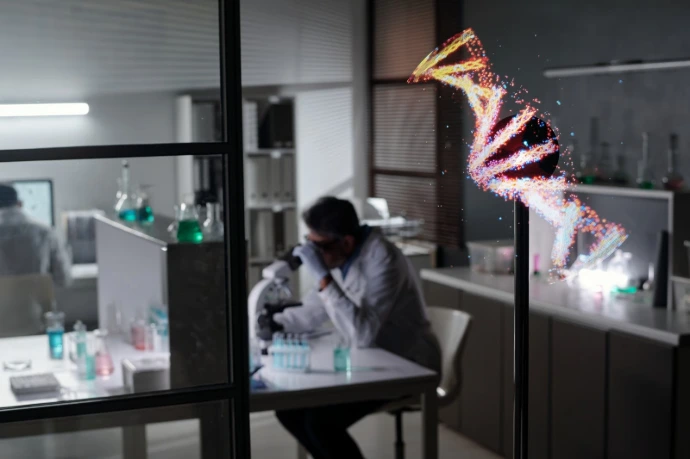
Biological information exists across interconnected molecular layers.
Genomics
Investigating the organization, variation, and functional potential of genetic information.
Transcriptomics
Exploring RNA expression patterns and their relationship with cellular states.
Proteomics
Studying protein abundance, interactions, modifications, and functional networks.
Metabolomics
Examining molecular signatures generated by cellular metabolic activity.
Epigenomics
Understanding regulatory mechanisms that influence how biological information is interpreted without changing the underlying genetic sequence.
Multi-Omics
Connecting several molecular layers to construct more comprehensive representations of biological systems.


Intelligent Analysis of Complex Biology
Modern biomolecular research increasingly depends on the ability to connect heterogeneous datasets.
A genomic signal may become meaningful only when considered alongside transcriptional activity.
A protein alteration may become interpretable through its metabolic consequences.
A cellular phenotype may emerge from interactions occurring across several molecular layers.
This is where integrated analytical approaches become particularly valuable.
Intelligent Biomolecular Research investigates these connections rather than treating molecular datasets as isolated entities.

Research Themes
Molecular Networks
Biological functions emerge from interactions between molecular components.
We explore network-based perspectives for studying:
- Protein–protein interactions
- Regulatory networks
- Signaling pathways
- Gene regulatory relationships
- Molecular dependencies
- Cellular communication
RNA Biology
RNA represents far more than an intermediate between DNA and proteins.
Contemporary RNA research encompasses:
- Messenger RNA
- Non-coding RNA
- Regulatory RNA
- RNA processing
- RNA–protein interactions
- RNA-mediated regulation
- Emerging RNA technologies
Understanding these mechanisms provides new perspectives on cellular organization and molecular regulation.
Protein Systems
Proteins operate within dynamic molecular environments rather than independently.
Research perspectives include protein structure, molecular interactions, functional relationships, post-translational regulation, and protein networks.
A Different View of Biomolecular Data
Traditional research often asks:
What molecule is present?
A systems-oriented perspective asks:
How does this molecule interact with everything around it?
An intelligent biomolecular perspective goes one step further:
What hidden relationships can be discovered within the complete molecular information landscape?
This progression—from identification to interaction to interpretation—defines an important direction for modern biological research.

Emerging Technologies
The biomolecular research landscape is rapidly evolving.
New technologies are changing how researchers observe biological systems at increasingly detailed scales.
Areas of emerging interest include:
Single-Cell Biology
Studying molecular differences between individual cells rather than relying exclusively on population-level measurements.
Spatial Biology
Investigating where molecular events occur within tissues and biological environments.
Multi-Omics Integration
Combining complementary molecular datasets to obtain broader biological representations.
Molecular AI
Applying computational intelligence to molecular datasets, structures, interactions, and biological predictions.
High-Throughput Biology
Generating and analyzing large-scale molecular measurements to investigate biological variation.
From Biological Questions to Molecular Insights
Our research philosophy can be represented as a continuous process:
Question → Measurement → Molecular Data → Computational Analysis → Biological Pattern → Interpretation → New Hypothesis
Each stage contributes to transforming complex biological information into scientifically meaningful insight.
The value of modern biomolecular research increasingly lies not only in generating measurements, but in understanding what those measurements collectively reveal.
Knowledge at the Intersection of Disciplines
Intelligent Biomolecular Research sits at a multidisciplinary intersection.

Molecular Biology
Understanding biological mechanisms.

Biotechnology
Translating biological knowledge into technological possibilities.
Bioinformatics
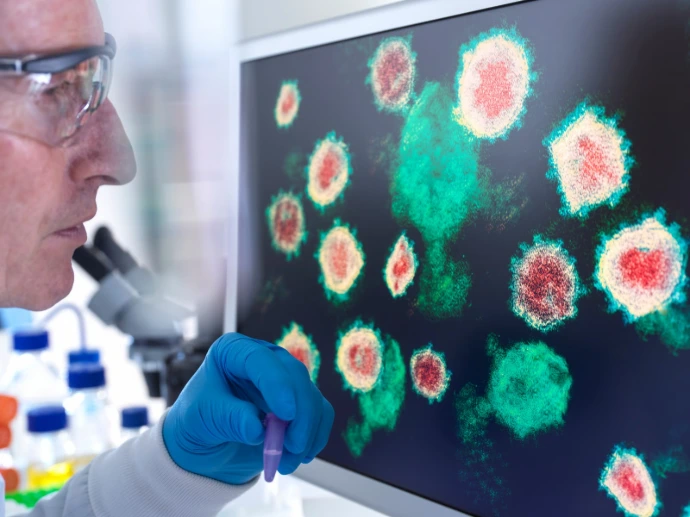
Organizing and interpreting molecular datasets.

Computational Biology
Building analytical approaches for complex biological systems.
Artificial Intelligence
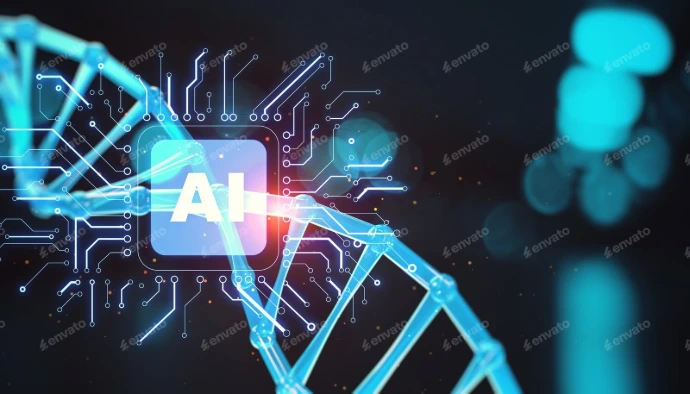
Recognizing patterns within large and multidimensional datasets.
The Future Is Interconnected
The next generation of biomolecular research will increasingly depend on the ability to connect disciplines, datasets, technologies, and biological scales.
The distinction between experimental biology and computational biology is becoming less rigid.
Molecular datasets are becoming larger.
Biological models are becoming more sophisticated.
Analytical technologies are becoming more intelligent.
And the questions researchers ask are becoming increasingly interconnected.
Intelligent Biomolecular Research explores this transition toward a more integrated understanding of biology.
